A good driver can be forgiving and still tell you when you missed. That is what makes the standard Elyte interesting. Published testing describes a solid strike, a pronounced sound and useful help away from the center. It is an all-round head worth comparing if your current driver spins too much, provided the lower-spin tendency does not flatten the shots you already struggle to launch.
A worthwhile fitting for a golfer who likes a substantial, clearly audible strike and wants adjustable flight without moving straight into a specialist low-spin head.
Judge the view behind the ball
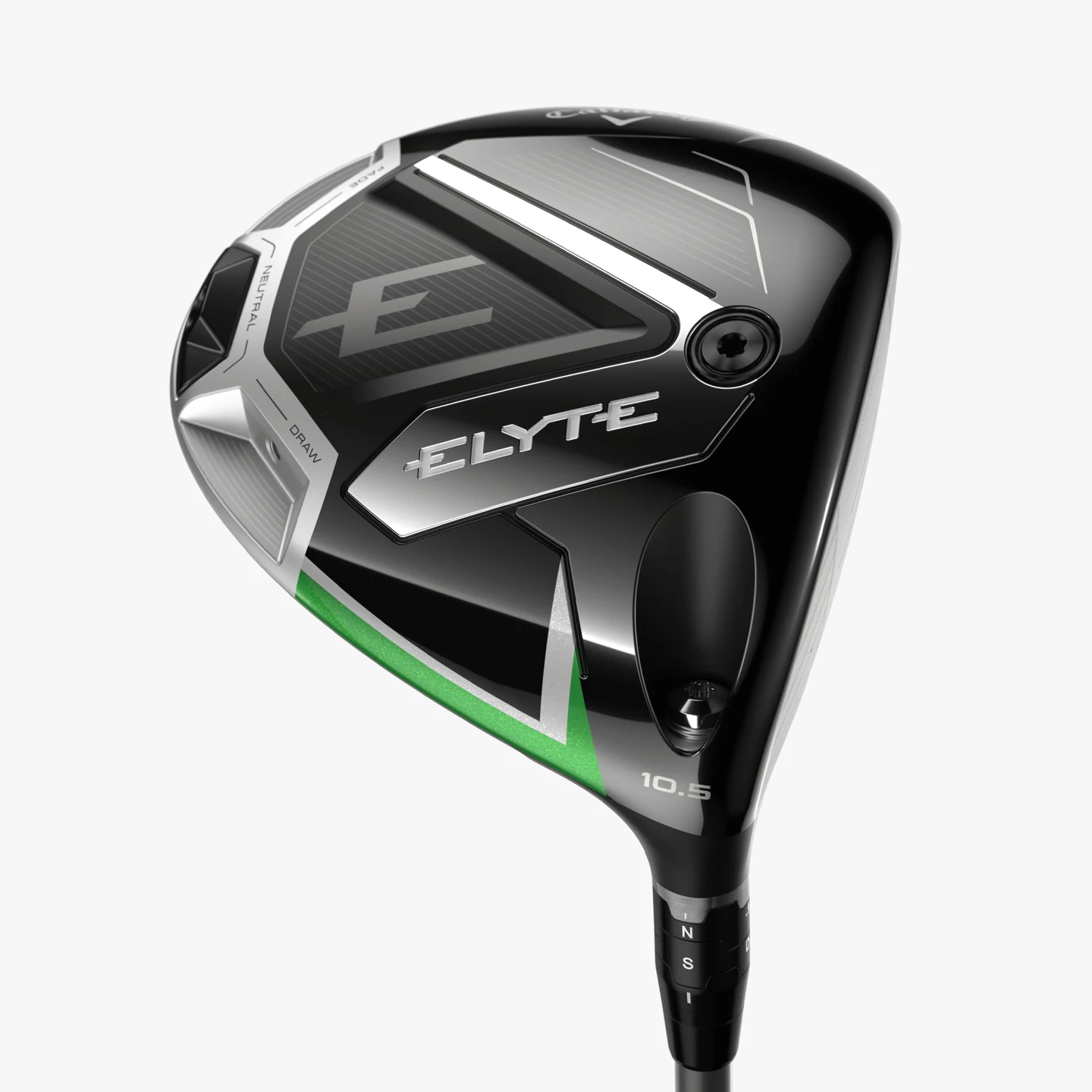
The sole has plenty happening: green accents, dark panels and three rear weight locations. From address, the view is considerably quieter. The carbon crown and tapered outline give you a different impression from the one a product thumbnail might suggest.
Keep the standard Elyte separate from Elyte X, Triple Diamond and Max Fast. The standard head is the middle-of-the-family option in Callaway’s positioning. Choose the one that fits the flight you need rather than treating the most expensive or most forgiving label as an automatic upgrade.
Sound & feel: a deep report and a substantial hit
Matt Saternus’s Plugged In Golf test describes a low, pronounced boom from centered contact and a sharper crack from a miss. He found the sensation through the hands solid and fairly traditional, with an obvious difference between good and poor contact. This is a useful candidate if you enjoy impact feedback you can actually hear. Read Saternus’s testing ↗
Joe Ferguson at Golf Monthly likewise described a robust feel, rather than the softest sensation in the category. Neither review supplies a standardized loudness measurement. Take the tone as a reason to try it outdoors, where the sound will be closer to the one you hear on a tee box.
Forgiveness still needs the right launch window
Saternus found strong ball speed across the face and a lower-spin tendency than the preceding mainstream Callaway generation. Ferguson’s separate test paired relatively low spin with useful launch and good behavior on questionable strikes. Those are encouraging observations, but they do not establish a guaranteed yardage gain for a new owner.
If you already hit low, running drives, ask whether this build keeps enough height and carry on a modest swing. If your current flight climbs and stalls, compare whether the Elyte brings it into a more useful window. Keep the landing area in the conversation: the best drive on a firm summer fairway may be less useful into a soft, uphill one.
Keep the head, shaft and weight setting in view
The U.S. standard specifications list 460 cc, a 45.75-inch length and three stated lofts. Those figures describe the standard product, not every custom or used build. Confirm the actual playing length, shaft and hosel setting on the club you are buying.
Use the rear weight positions to compare shot patterns with your fitter. A setting that makes the address position look reassuring still needs to produce the start direction and curve you want. When buying used, check the hosel, weight hardware and carbon surfaces closely; a bargain stops being attractive if parts or condition are uncertain.
Before you buy.
Where we land.
The Elyte gives you a convincing combination of a substantial strike and broadly useful performance. The sensible purchase is the build that keeps your normal miss in play and your carry high enough. Its sound can be part of the enjoyment, but the landing pattern should close the decision.
A couple of good questions.
Is this the Elyte Triple Diamond?
No. This review covers the standard 460 cc Elyte. Triple Diamond is a separate lower-spin model.
Should I expect the advertised extra yards?
Use the manufacturer’s comparisons as test claims under stated conditions. Compare your own current driver with the same ball and fitting conditions before expecting a gain.
Sources & specifications.
Manufacturer information and published testing checked November 9, 2026. Product photographs are credited beside the relevant images.
ManufacturerCallaway · Elyte U.S. specifications and product imagesPublished testingMatt Saternus · Plugged In Golf Elyte testPublished testingJoe Ferguson · Golf Monthly Elyte test